

Why is the Supervision of Prescribed NPOs important?
Globally, it is recognised that Non-Profit Organisations (“NPOs”), including registered charities, may be exploited to raise and move funds to support terrorist activity. Jersey is proud to have a thriving and diverse NPO sector and must endeavour to protect it from terrorist exploitation, both as a critical component of the global fight against terrorism as well as to preserve the integrity of the sector and the trust of our donor community.
Jersey is committed to safeguarding and maintaining good practices of charitable giving and to work with the NPO sector to ensure transparency, accountability, and safe practices, to prevent exploitation by other criminals and terrorists.
Ultimately, the JFSC does not wish to interfere or add unnecessary burden to the NPO sector which is a vital contributor to society and its members, not just in Jersey but also in the world economy, providing important services and functions which enhance the quality of life for many, often under challenging and desperate circumstances.
Despite the good work that the vast majority of NPOs undertake, there are examples internationally of them being abused, directly or indirectly, for terrorist financing purposes.
NPOs rely on donations received reaching their intended recipient beneficiaries. This also drives donor confidence. Diversion to terrorist actors removes the NPO’s resources away from those in need to be used for harmful purposes. Diversion is the illicit removal of items of value to bad actors (usually described as designated/sanctioned persons which includes individuals as well as legal persons/arrangements).
The Financial Action Task Force has described the likelihood of Diversion as being dependent on three factors:
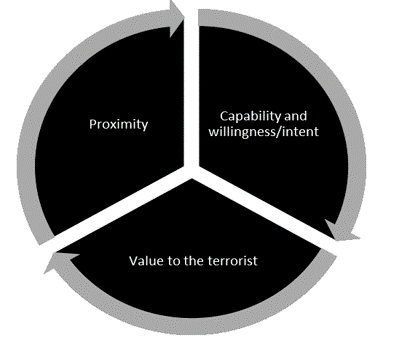
This means that the closeness of a terrorist actor to the NPO and its NPO programme plays a part. It explains why some countries, jurisdictions and areas, as well as the areas adjacent to them, are treated as being more exposed to terrorist financing risk than others. Equally, if the NPO has access to resources that the terrorist actor values, this brings heightened risk. The terrorist actor must also have both the intent and capability to take advantage of the NPO.
Systems and controls, such as good governance, policies and procedures, help to mitigate the risk.
Terrorist financing abuse may happen in numerous ways. For example, NPOs may be:
- A cover: This is when the NPO acts as a front, pretending to do good work. In reality, it funds terrorist activities. At times the donors are aware of this illicit purpose. In the case of the Benevolence International Foundation, the organisation contracted with Al Qaeda to provide support for an injured foreign terrorist fighter, whilst its documents made it look as if the aid was provided to an orphan. Front NPOs have been abused by organisations such as the Irish Republican Army, Al-Qaeda and Liberation Tigers of Tamil Eelam (LTTE).
- A conduit: This occurs when a NPO undertakes good work and, additionally, siphons off funds for terrorist activities. This can occur when the NPO:
- Is ‘hijacked’ by a bad actor, such as a staff member or volunteer who has influence over funds and who diverts them to a terrorist organisation, a terrorist cells or an individual terrorist. The siphoned off/diverted funds can then be used for terrorist causes such as to fund terrorist attacks, obtain weapons, and pay foreign terrorist fighters and their families
- Does not have adequate procedures and is not undertaking due diligence on who it is collaborating with (a Partner) or who it pays its funds to (Beneficiaries). Partners may include, for example, other NPOs and charities that the NPO collaborates with locally, or its contractors, venders and suppliers, for example its security staff
- Is pressed to pay a “tribute”, a fee or a tax, for its ‘safe passage’ to enter, pass through, operate in, and exit an area.
These tactics of abusing NPOs have been used by, for example, Al-Qaeda, Hezbollah, Lashkar-e-Tayyaba, Kurdistan Workers’ Party (PKK) and Al-Shabaab.
- A con: In this scenario, the NPO does not exist. Instead, bad actors pretend that they are raising funds for a legitimate NPO. They may for example wear charity T-shirts and raise funds through bucket collections. This tactic was used by the members of the Birmingham bomb plot.
Much diversion risk related to terrorist financing can be mitigated by good governance and robust policies and procedures. Such systems and controls are also beneficial to counter other forms of criminal activity, including money laundering and proliferation financing. Diversion displays similar characteristics as risks such as those related to bribery, corruption and fraud.
Global and Island efforts to fight terrorist financing
As a reputable international finance centre, Jersey is committed to fighting financial crime, including the financing of terrorism. The Financial Action Task Force (FATF) is the international standard setter in this space.
FATF’s global efforts on combating terrorist financing
The FATF Recommendations (The standard and interpretive notes – updated March 2022), Recommendation 8 is on page 13 and the Interpretive Note to Recommendation 8 starts on page 58.
The FATF Methodology (The methodology for assessing technical compliance with the FATF Recommendations and the Effectiveness of AML/CFT systems – updated in October 2021).
Recommendation 8 starts on page 39.
In April 2022 the Government of Jersey's National Risk Assessment of Non-Profit Organisations (gov.je) was published.
On 11 August 2021, we held a webinar for Industry on the subject of terrorist financing and non-profit organisations.
Webinar on Terrorist financing and non-profit organisations
Additional information sources can be accessed here via our Handbook.
Supervision of those NPOs at higher risk of terrorist financing abuse by virtue of their activities and characteristics is key to safeguarding Jersey and maintaining good practices of charitable giving, transparency and accountability to prevent exploitation by other criminals and terrorists.